
Composition
Cofactors & Small Molecules in Canada
Research materials that are not peptides: redox cofactors, coenzymes, small-molecule receptor ligands, and the compounded solutions built from them.
Composition
Cofactors & Small Molecules stocked in Canada
- Sold out
- Sold out
- BlendSold out
Cofactors & Small Molecules
Healthy Hair Skin & Nails Blend (HHB) 1,503mg
- Purity
- >99%
- Fill
- 1,503mg / 10ml
CA$82View details - Sold out
- BlendSold out
- BlendSold out
- BlendSold out
- Sold out
- BlendSold out
Cofactors & Small Molecules
Relaxation PM Blend (PR226) 2,260mg
- Purity
- >99%
- Fill
- 2,260mg / 10ml
CA$74View details - Sold out
- BlendSold out


What is in this group, and why it is defined by what it is not
The research materials in this catalogue that are not peptides.
A deliberate negative definition
Every other group here is defined by what its members are. This one is defined by what they are not, and that is on purpose: these are the vials in the catalogue that are not built from amino acids, and keeping them in a group that says so is what stops them being described as peptides somewhere they are not.
It matters more than it sounds. A storefront whose navigation implies that a vitamin is a peptide has made a claim about its contents, and the correction is harder than the original classification.
Redox cofactors, coenzymes and vitamins
NAD+ is the central redox cofactor of cellular metabolism — a dinucleotide, not a peptide, and catalogued in the literature as nicotinamide adenine dinucleotide. B12 is supplied here as methylcobalamin, the methylated coenzyme form of the vitamin, built around a cobalt-containing corrin ring. Glutathione is a tripeptide by strict composition but functions as a redox cofactor and is handled with this group for that reason, which is the one place this classification is a judgement rather than a chemical fact.
L-Carnitine is a quaternary ammonium compound derived from lysine and methionine. None of these is an amino-acid chain of the kind the Peptides group holds.
Small-molecule ligands and compounded solutions
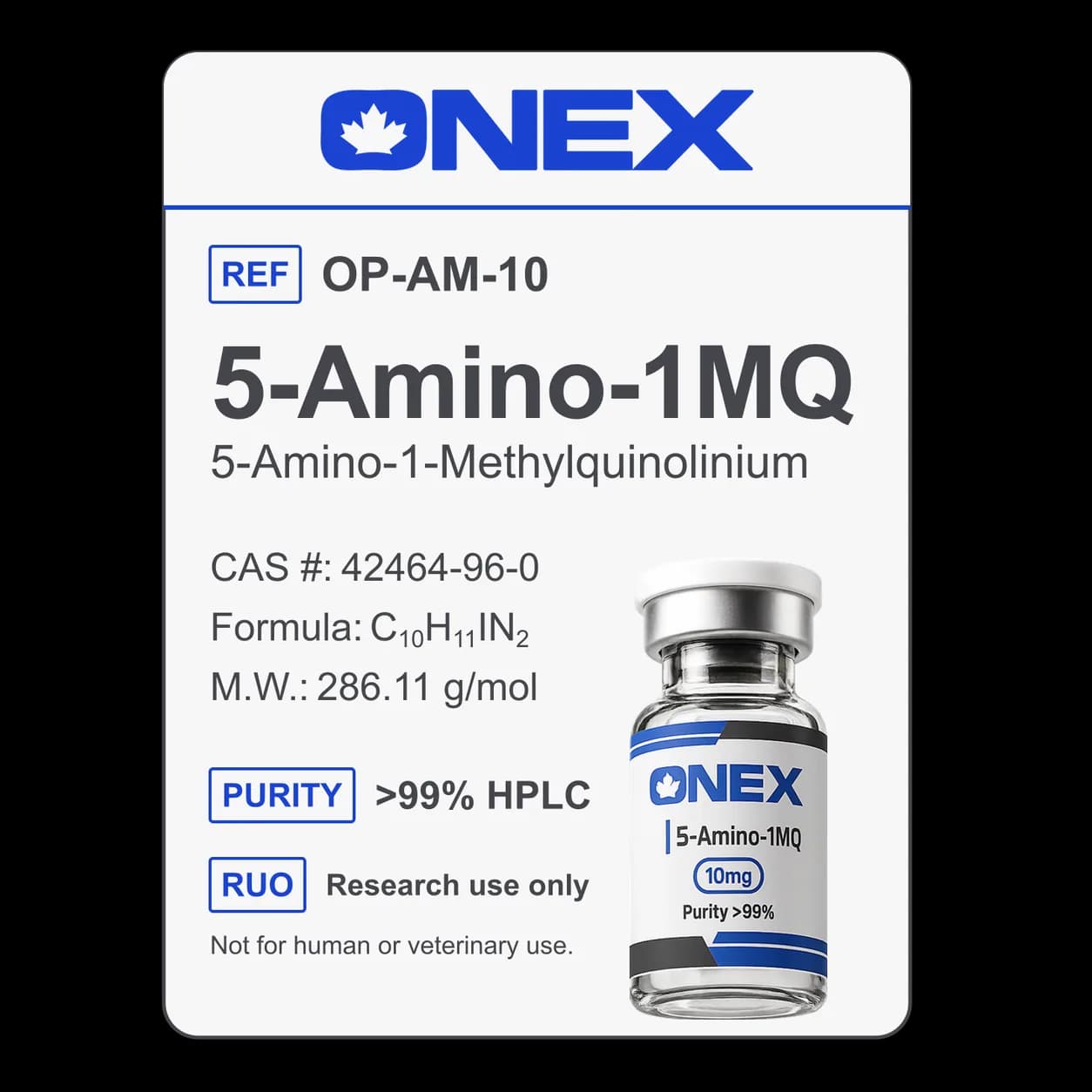
Three compounds in this group are small-molecule receptor ligands or enzyme inhibitors rather than biologics: 5-Amino-1MQ is an NNMT inhibitor, SLU-PP-332 is a pan-agonist of a nuclear receptor family, and Dihexa is a small-molecule analogue of angiotensin IV. Each product page states its own class, and each is released against the same purity specification as the rest of the catalogue.
The group also holds the compounded solutions — vials combining amino acids, vitamins and cofactors, supplied in solution rather than lyophilised because their constituents do not require freeze-drying to remain stable. Their certificates report each constituent separately, for the same reason a peptide blend's does: an instrument separates a mixture into components and reports on each, and there is no single purity figure for a multi-component vial.
Sold-out listings stay published rather than being removed, so their specifications, catalogue numbers and certificates remain readable while the compound is out of stock. For laboratory research use only. Not for human or veterinary use.